
Garage Floor Coatings in Sarasota, FL
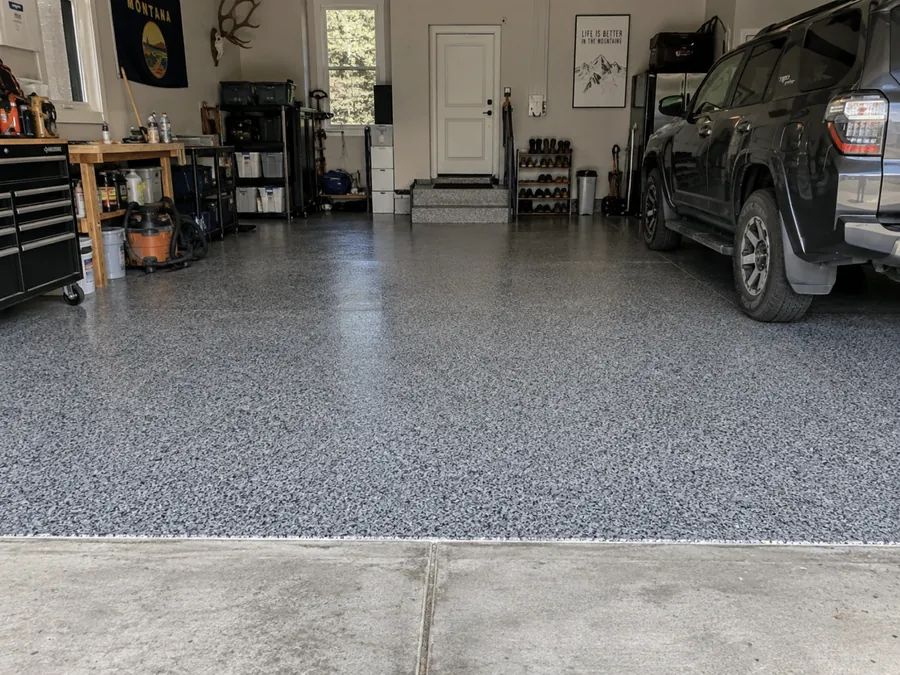
A garage floor in Sarasota deals with more than most rooms in the house — tire heat, sand, oil, humidity, and the occasional flooded slab after a storm. A coated floor handles all of it far better than bare or painted concrete.
Why Garage Floors in Sarasota Need More Than Paint
Bare concrete is porous — it absorbs oil, holds onto tire marks, and can develop stains that are difficult to remove within a season or two of normal use. Big-box "garage floor paint" commonly chips and peels under vehicle weight because it isn't formulated to mechanically bond the way a proper coating system does. A garage floor coating addresses both issues: it seals the concrete so it resists absorbing stains, and it bonds to the slab in a way built to hold up to daily vehicle traffic rather than flaking off within a year.
The most common reasons Sarasota homeowners look into a coating: the garage has become hard to keep clean, an old DIY paint job is peeling, or they're finishing a garage as usable space — a workshop, gym, or simply a garage that doesn't look neglected next to the rest of the house.
Coating Systems for Sarasota Garages
Three systems cover almost every garage project:
Epoxy
A durable, cost-effective standard. Available in solid colors or decorative flake blends. The right choice for most garages that don't need the fastest possible turnaround.
Standard for most garages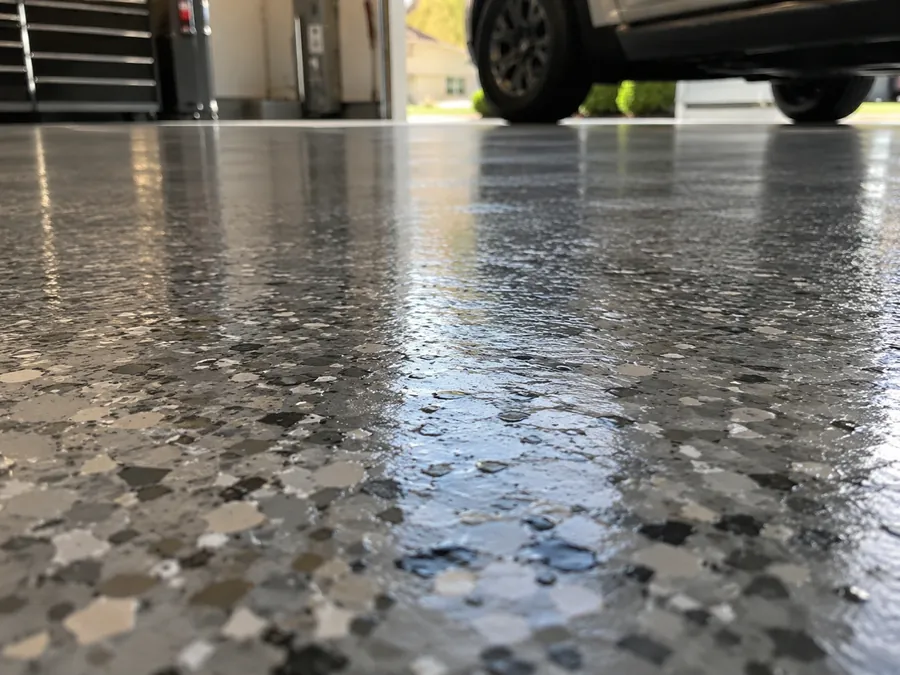
Polyaspartic
Cures faster than epoxy and holds up slightly better against hot tire pickup and UV exposure.
See the full picture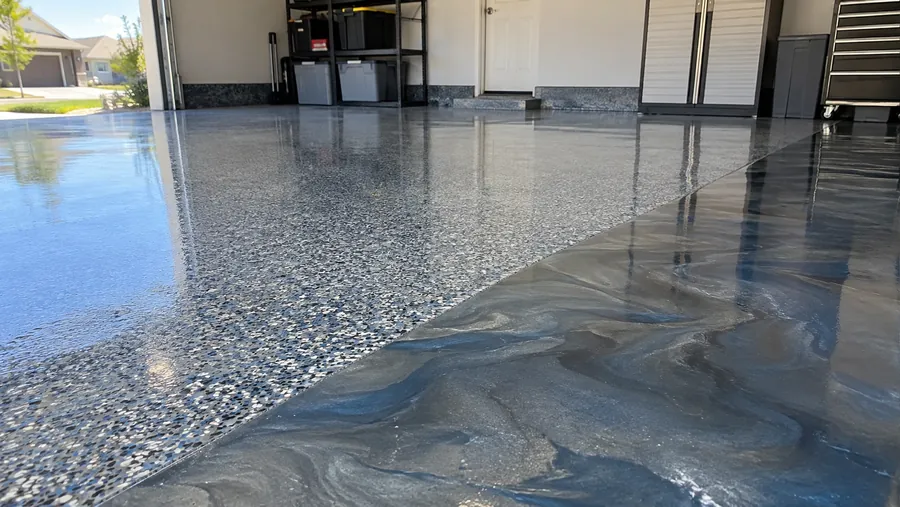
Decorative Flake & Metallic
Flake blends hide minor imperfections and add texture; metallic finishes turn a garage into a showroom-style space.
See metallic epoxyBuilt for Vehicle Traffic, Heat, and Stains
Hot Tire Pickup
The marks left when a hot tire softens a lower-grade coating and pulls at it while rolling — a real risk in a sun-facing Sarasota garage. Quality epoxy and polyaspartic systems resist it far better than a DIY paint kit.
Oil, Chemicals & Stains
A coated floor is sealed, so oil drips and chemical spills sit on the surface and wipe up instead of soaking into the concrete permanently.
Slip Resistance
A smooth coating can be slippery when wet, which matters in a garage that sees rain-soaked tires and pool gear tracked through. A texture additive can substantially improve traction without changing the look significantly.
Surface Preparation Comes First
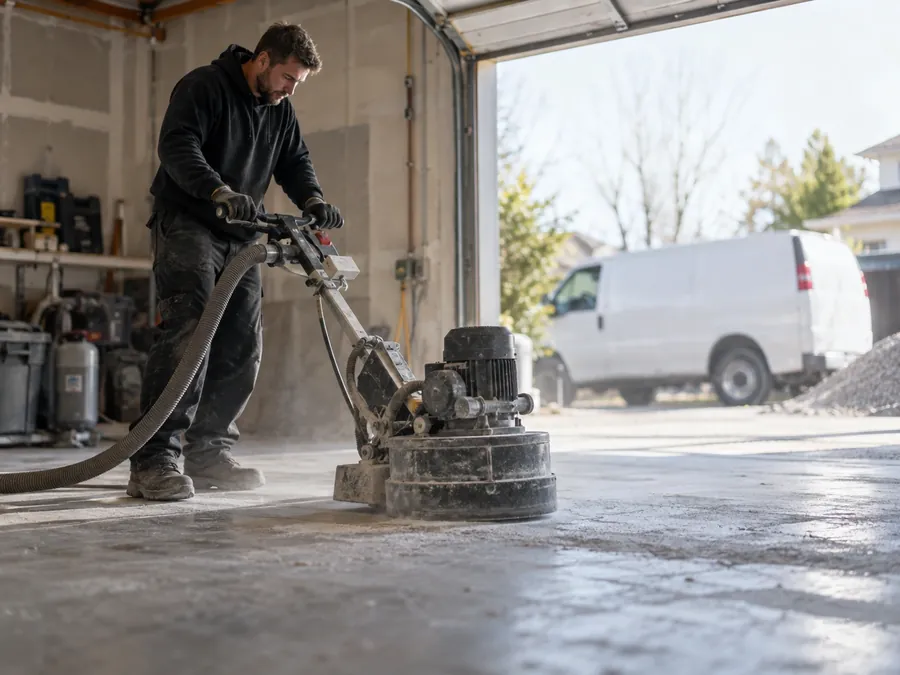
Every coating's lifespan depends on what happens before it's ever mixed. We diamond-grind the slab to open its surface profile so the coating actually bonds, rather than sitting on top of the concrete the way paint does. Minor cracks are routed and filled; larger structural cracks are flagged and addressed before coating rather than papered over. Moisture is checked, since a garage slab with unaddressed moisture is one of the most common causes of peeling and bubbling in Florida's climate.
This is covered in full on our concrete surface preparation page — it applies to every coating system we install, not just garages.
Garage Floor Coating Cost in Sarasota
Cost scales mainly with garage size and slab condition — here's how size alone typically affects the project:
| Garage Size | Approx. Square Footage | What Changes |
|---|---|---|
| 1-Car Garage | ~200-250 sq ft | Smallest area to prep and coat — typically the lowest total cost |
| 2-Car Garage | ~400 sq ft | Our most common project size |
| 3-Car Garage | ~600-700 sq ft | Highest total cost, though often a lower cost per square foot than a smaller garage |
Beyond size, cracks, oil staining, an existing coating that needs to be ground off, and the coating system you choose all move the price. See our full cost guide for what affects price, or call for a firm number after we see the slab.
Installation Timeline & Cure Time
Most garage installations take a couple of days from prep through the final coat. How soon you can park in the garage again depends on the system: polyaspartic generally returns to service faster than standard epoxy, which needs a longer full cure before it can handle vehicle weight. We confirm exact timing for your project before work starts, not after.
Maintaining a Coated Garage Floor
A coated garage floor is easier to live with than bare concrete — sweep or rinse off sand and debris, wipe up spills before they sit, and avoid dragging sharp metal edges across the surface. Beyond that, there's little maintenance involved, which is part of the appeal over unfinished concrete.
Frequently Asked Questions
How much does a 20x20 garage floor cost to coat?
How much does it cost to coat 400 square feet?
How long does a garage floor coating last?
Is epoxy slippery in a garage?
Is epoxy or polyaspartic better for a garage floor?
When can I park in the garage after coating?
Does hot tire pickup happen with garage coatings?
What happens if my garage slab has moisture?
Get a Garage Floor Coating Estimate
Free on-site evaluation, including a moisture check.