
Pool Deck & Outdoor Coatings in Sarasota, FL
Pool decks, lanais, and covered patios face sun, water, and bare feet every day — conditions an interior-only coating specification typically isn’t built to handle.
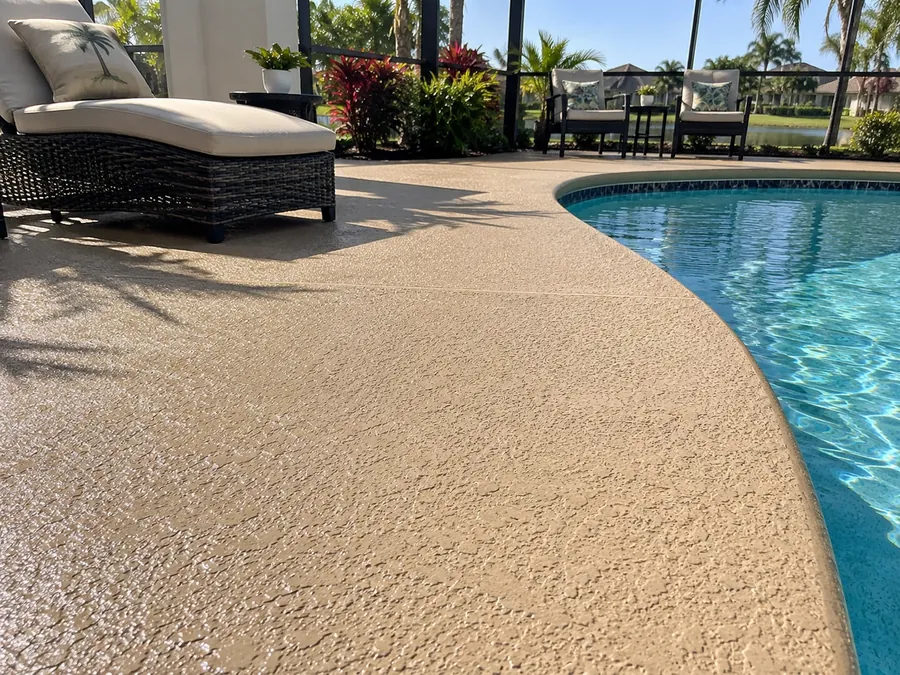
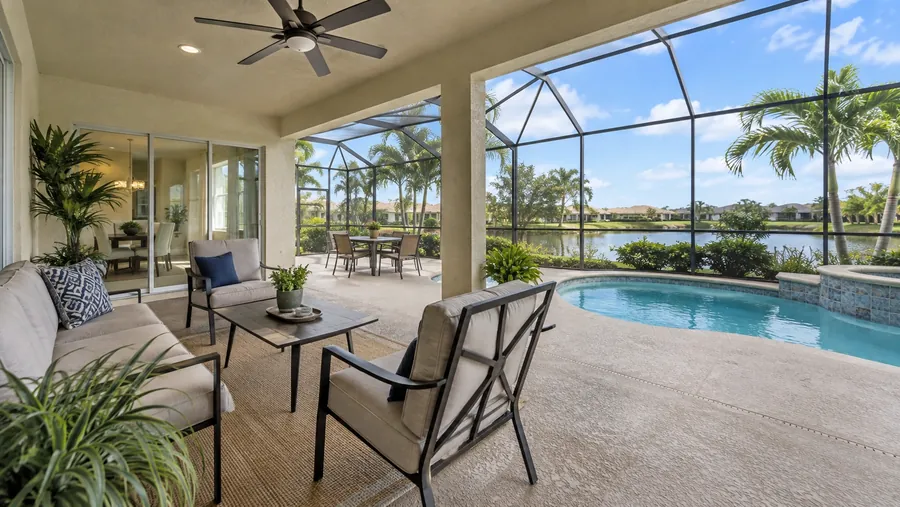
Why Outdoor Concrete Needs a Different Spec
An interior coating chosen for a garage or living room isn't automatically the right choice for a pool deck. Outdoor and semi-outdoor concrete deals with constant water exposure, direct sun, and bare feet — three conditions that push a coating in different directions than an interior floor ever experiences. UV stability, slip resistance, and how the surface performs when wet all matter more outdoors than they do inside.
What We Account For Outdoors
UV Exposure
Fully sun-exposed concrete needs a coating rated for it, or the finish can amber and degrade faster than it would indoors.
Slip Resistance
A texture additive in the topcoat is standard for pool decks and wet lanai areas — not optional the way it might be for a dry interior room.
Heat Underfoot
Coating color affects how hot a deck gets in direct Florida sun; lighter finishes stay cooler for bare feet.
Water Exposure & Drainage
Pool splash and rain mean the coating needs to handle constant moisture exposure without lifting or bubbling.
Covered Lanais vs. Open Pool Decks
Sun exposure is the deciding factor, and it's evaluated per space rather than assumed.
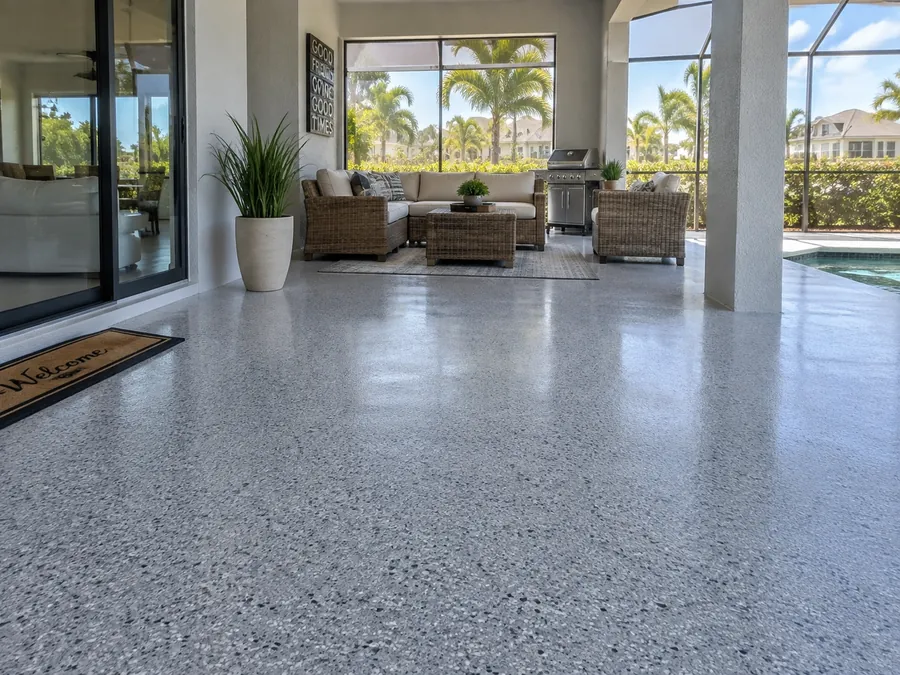
Covered Lanai
Gets significant protection from direct sun, which opens up more coating options than a fully exposed deck allows.
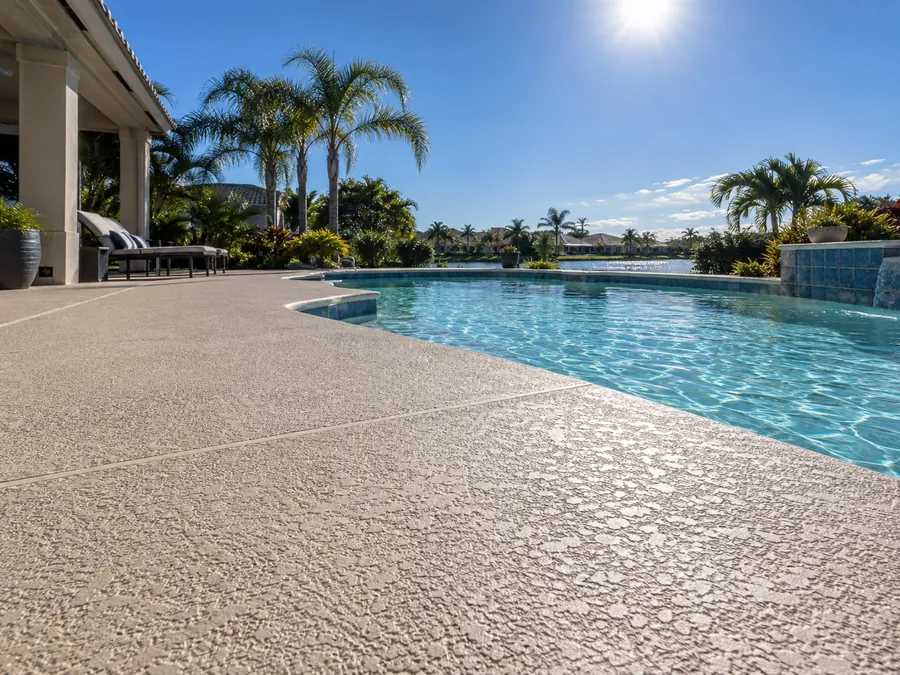
Open Pool Deck
In full Florida sun needs the most UV-stable system available — typically polyaspartic.
We evaluate sun exposure specifically for your space rather than applying one outdoor spec to every project.

Preparation for Outdoor Concrete
Outdoor slabs bring their own prep considerations — sun-baked contamination, prior sealers, and moisture from ground contact all get addressed before coating. The fundamentals are the same as any project: see our surface preparation page.
Frequently Asked Questions
Can epoxy be used outdoors on a pool deck?
Is a coated pool deck slippery when wet?
How hot does a coated pool deck get in the sun?
Can a covered lanai use a different system than an open pool deck?
Get a Pool Deck or Lanai Estimate
We'll recommend the right system based on your space's sun exposure.